知能機能システム学位プログラムを修了した学生は,情報通信,電機・機械・自動車などの製造業,サービス業,大学・研究機関など,幅広い分野で活躍しています.以下は,2021~2024年度の修了者の主な進路実績です.
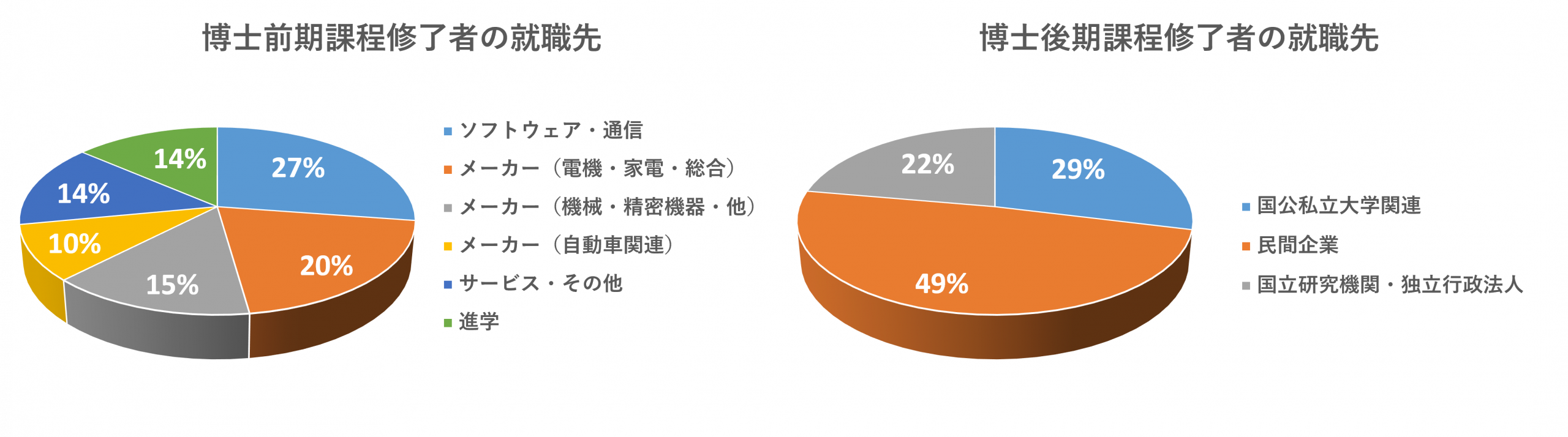
博士前期課程修了後の主な就職先は,ソフトウェア・通信(DeNA,NTT,NTTコミュニケーションズ,ソフトバンク,楽天,NTTデータ,NTTドコモ,任天堂,KDDI,ヤフーなど),メーカー(電機・家電・総合:日立製作所,ソニー,パナソニック,三菱電機,富士通など),メーカー(機械・精密機器など:オリンパス,リコー,キヤノン,京セラ,コマツ,三菱重工業,ヤマハ,シチズン,カシオ,マブチモーターなど),メーカー(自動車関連:デンソー,トヨタ,本田技研,日産,豊田自動織機,マツダ,SUBARU,アイシン精機,ダイハツなど),サービス・その他(JR東日本,東京電力,新日鐵住金など)です.また,博士後期課程への進学者もいます.
博士後期課程を修了した学生は,国公私立大学関連(筑波大学,電気通信大学,茨城大学,東京海洋大学,首都大学東京,豊橋技術科学大学,名城大学,豊田工業大学,千葉工業大学,岐阜高専,University of Verona,Max Planck Institute,University Malaysia Pahangなど),民間企業(富士通研究所,NTT研究所,三菱電機,島津製作所,スクウェア・エニックス,放送衛星システム,東芝メディカルシステムズ,CYBERDYNEなど),国立研究機関・独立行政法人(産業技術総合研究所,国立スポーツ科学センターなど)で活躍しています.
Graduates of the Master’s and Doctoral Programs in Intelligent and Mechanical Interaction Systems pursue careers in a wide range of fields, including information and communications, electrical, mechanical, and automotive industries, service industries, universities, and research institutions. The following are major career destinations of graduates from AY2021 to AY2024.
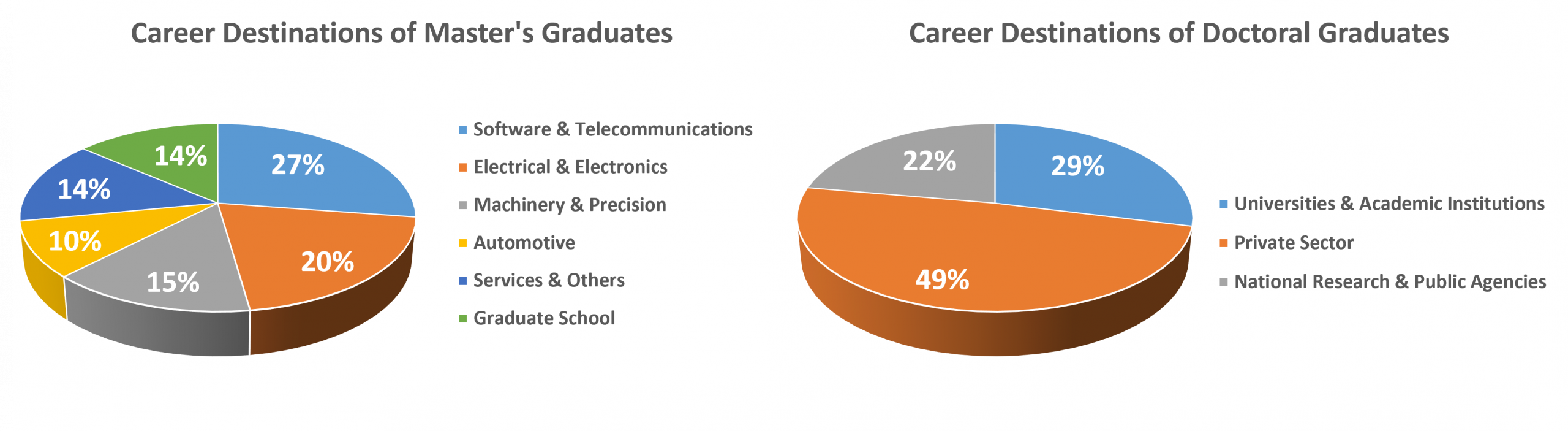
Major career destinations after completing the Master’s Program include software and communications companies (e.g., DeNA, NTT, NTT Communications, SoftBank, Rakuten, NTT DATA, NTT DOCOMO, Nintendo, KDDI, and Yahoo); electrical, electronics, and diversified manufacturers (e.g., Hitachi, Sony, Panasonic, Mitsubishi Electric, and Fujitsu); machinery and precision equipment manufacturers (e.g., Olympus, Ricoh, Canon, Kyocera, Komatsu, Mitsubishi Heavy Industries, Yamaha, Citizen, Casio, and Mabuchi Motor); automotive-related manufacturers (e.g., DENSO, Toyota, Honda, Nissan, Toyota Industries, Mazda, SUBARU, Aisin Seiki, and Daihatsu); and service and other industries (e.g., JR East, Tokyo Electric Power Company, and Nippon Steel & Sumitomo Metal). Some graduates also continue their studies in doctoral programs.
Graduates of the Doctoral Program pursue careers at national, public, and private universities and colleges (e.g., University of Tsukuba, The University of Electro-Communications, Ibaraki University, Tokyo University of Marine Science and Technology, Tokyo Metropolitan University, Toyohashi University of Technology, Meijo University, Toyota Technological Institute, Chiba Institute of Technology, National Institute of Technology, Gifu College, University of Verona, Max Planck Institute, and Universiti Malaysia Pahang); private-sector companies and research laboratories (e.g., Fujitsu Laboratories, NTT Laboratories, Mitsubishi Electric, Shimadzu, Square Enix, Broadcasting Satellite System Corporation, Toshiba Medical Systems, and CYBERDYNE); and national research institutes and independent administrative institutions (e.g., the National Institute of Advanced Industrial Science and Technology [AIST] and the Japan Institute of Sports Sciences).